
AI SEO in 2025: How Artificial Intelligence Is Reshaping Search
Artificial intelligence is redefining SEO in 2025 — from search intent to content generation. Learn how AI SEO is reshaping strategies and what brands must do now to stay ahead.
AI SEO in 2025: How Artificial Intelligence Is Reshaping Search
Search has changed — again.
And this time, it’s not just a core update or another tweak to algorithms. It’s AI SEO taking centre stage, rewriting the rules of how brands appear in front of users and how those users behave in the search ecosystem.
In 2025, traditional SEO tactics are no longer enough. With AI-driven engines such as Google’s Search Generative Experience (SGE) transforming the very fabric of search, brands must rethink their entire content and keyword strategy — or risk disappearing from the conversation altogether.
So what does AI SEO really mean in 2025? Why is it revolutionising how people find and interact with businesses? And most importantly — how can your brand stay visible?
Let’s explore.
What Is AI SEO in 2025 and Why It’s Changing Everything
The role of artificial intelligence in SEO has evolved from being a supporting tool to becoming the driving force behind search visibility, discovery, and relevance.
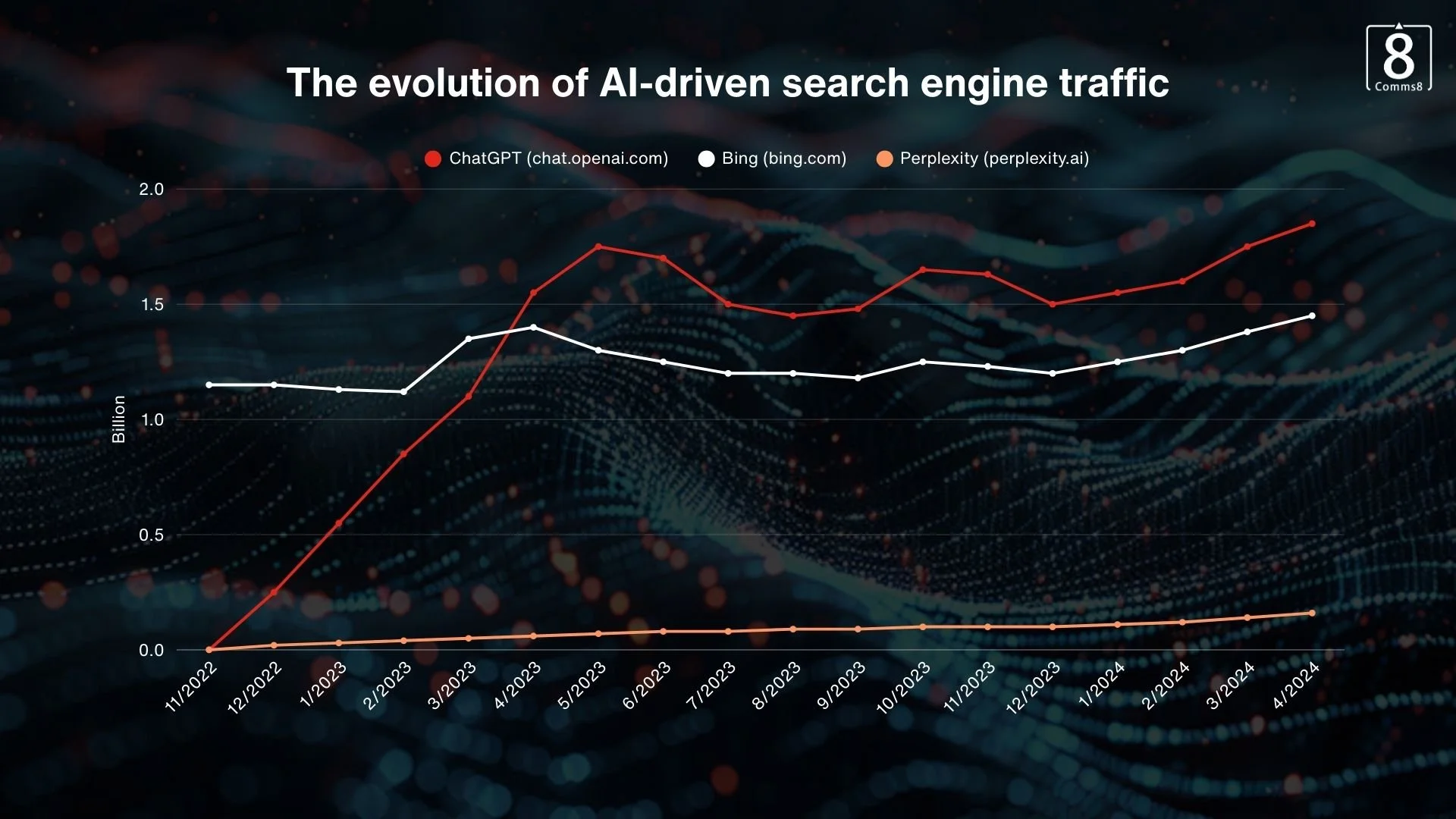
AI SEO: A Definition for 2025
AI SEO refers to the integration of artificial intelligence across SEO functions — including content creation, keyword clustering, user behaviour prediction, voice search optimisation, and even SERP (Search Engine Results Page) formatting. It also encompasses the shift in how search engines themselves are using AI to serve more personalised and contextualised results.
This is not about sprinkling keywords or chasing backlinks. It’s about building AI-optimised content ecosystems that respond to real human intent.
Here’s what makes 2025 a pivotal moment for AI SEO:
Google's AI Overviews now appear in over 75% of search results in the US, reshaping how people interact with the SERP (Search Engine Land, 2025).
According to McKinsey, AI now drives 40%+ of digital marketing activities, including SEO, content generation, and media buying.
A recent Nielsen Norman Group study found that 70% of users no longer click links, relying instead on AI-generated summaries.
Google Search’s new “Search Mode” leverages Gemini AI to deliver real-time, contextual responses, pulling from a wider variety of web sources — not just top-ranking domains (Google Blog, 2025).
This evolution means ranking first on Google no longer guarantees visibility. AI-driven summaries and knowledge panels often answer the user’s query before they ever scroll.
In essence, SEO is no longer about ranking — it’s about relevance in the AI layer of search.
How Search Engines Use AI in 2025
AI isn’t just a tool you use. It’s also what powers the search engine itself.
Major search engines like Google and Bing have integrated large language models (LLMs) into their core functionalities:
Search Generative Experience (SGE): Google’s Gemini now generates AI-powered summaries at the top of results pages.
Multimodal Search: Voice, image, and text are now processed simultaneously, meaning your content must be optimised across formats.
Entity-Based Search: AI uses relationships between topics (rather than keywords) to determine relevance.
This means:
Long-tail queries are more important than ever. Users are asking conversational, intent-rich questions.
Structured data is vital. Schema markup helps AI interpret your content correctly.
Topical authority wins. Creating deep, interconnected content on niche subjects matters more than broad keyword stuffing.
How AI SEO Is Reshaping Search Behaviour and Content Strategy
The user journey has fundamentally changed — and your SEO strategy must follow suit.
Let’s unpack how AI SEO is changing how people search, read, and decide.
Why Traditional Click-Through Rates Are Declining
According to Search Engine Land, Google’s market share has dropped from 92% to below 90% in some regions due to emerging AI platforms offering direct answers without needing to click through.
And even when users do use Google:
Zero-click searches now make up 65% of mobile queries.
AI snippets often replace traditional meta descriptions, limiting brand exposure.
Users are shifting to multi-platform discovery — especially through chatbots, voice assistants, and visual search tools.
This is where your AI SEO strategy must step in — with content that anticipates intent, answers questions, and is visible in AI-generated summaries.
How To Adapt Your Content for AI SEO
If your content is still written for human readers and the Googlebot, it’s time to shift focus.
Your content must now serve three audiences:
Humans (engagement, clarity, value)
Traditional search algorithms (structure, schema, authority)
AI summarisation models (context, concise explanations, entity clarity)
To optimise for AI SEO, ensure:
Your content answers full questions clearly within the first few paragraphs.
Use FAQ schema and How-To schema to provide machine-readable formats.
Internal linking supports topical depth and navigation across themes.
Use semantic keyword clustering (e.g., “AI SEO tools”, “AI for content ranking”, “SEO in 2025”) to build relevance.
Bonus: AI SEO Checklist for Content Creation
When publishing new content in 2025, ask:
Does it include conversational long-tail queries in H2/H3?
Have you structured content to be summarised by an LLM?
Is there clear semantic flow and topic depth?
Are there proprietary insights or statistics included?
Have you added relevant schema markup?
Tools and Technologies Powering AI SEO in 2025
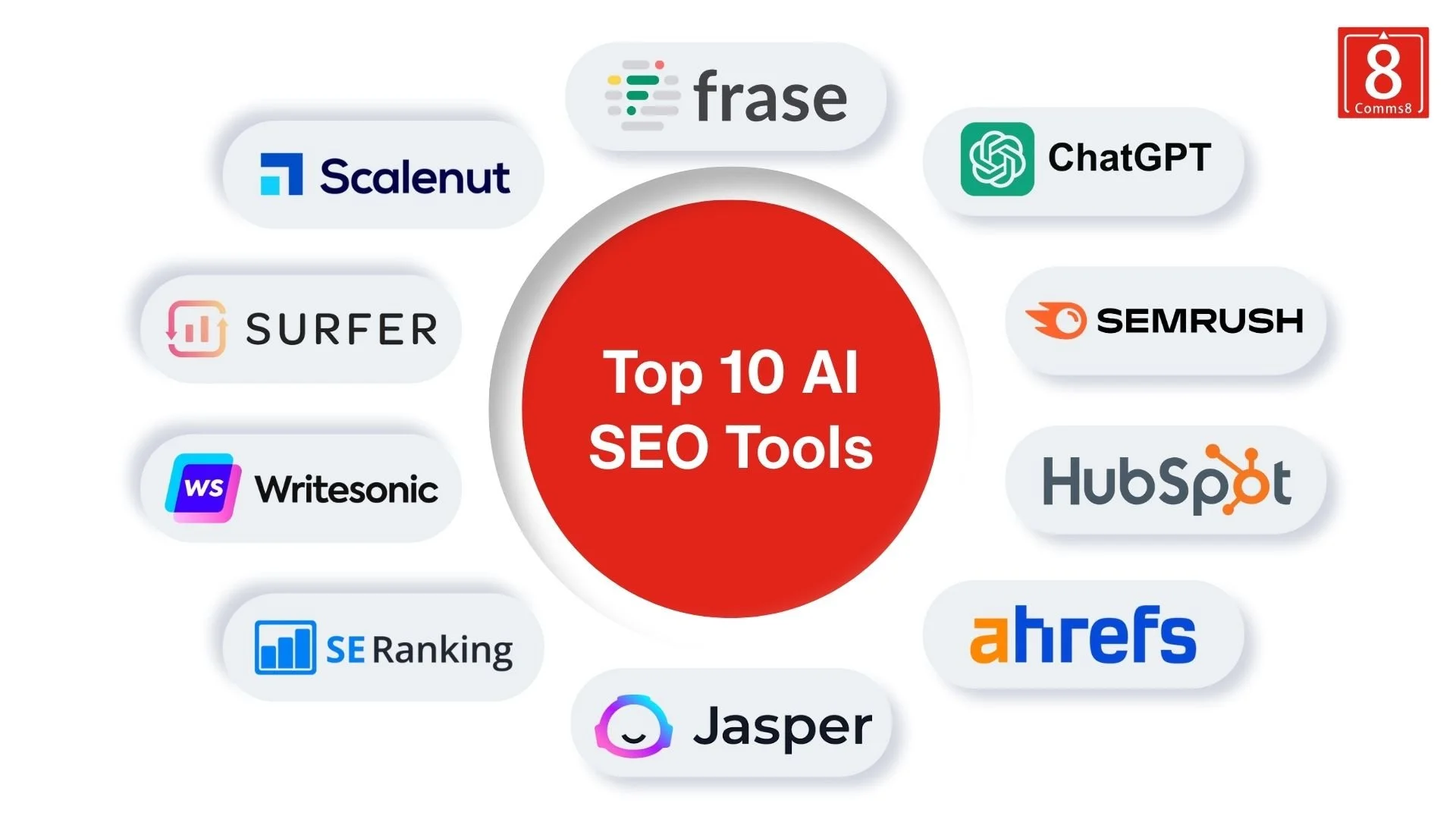
Here are the most widely adopted AI SEO tools this year:
Surfer AI: Assists with content scoring and real-time AI writing assistance.
NeuronWriter: Analyses intent and generates outline suggestions using LLMs.
MarketMuse: Builds content strategy based on topical authority models.
ChatGPT + Custom GPTs: Widely used to generate copy, FAQs, schema, and intent-based variations.
Google’s Gemini: Powers generative search; understanding how it reads your content is critical.
As McKinsey notes, AI adoption in marketing has reached 72% among leading digital brands — up from 50% in 2023. Ignoring these tools now risks serious competitive disadvantages.
Winning Strategies for AI SEO in 2025 and Beyond
It’s not about hacking the algorithm anymore. It’s about building for human intent — in AI-interpretable formats.
So, how do brands position themselves to win in the age of AI SEO?
5 Practical Tactics to Succeed in AI SEO
Double Down on Topic Authority
Build deep content libraries around focused subjects, not just isolated blog posts.Implement Structured Data Across All Pages
This includes FAQ, Article, Review, How-To, and Product schemas.Write for AI Summarisation
Start content with value-packed summaries and context-driven bullet points.Optimise for Multimodal Search
Ensure your images, voice responses, and video content are labelled and described using AI-friendly metadata.Use Your Own AI Tools
Don’t just respond to AI in search. Use your own GPTs and tools to generate content faster, test semantic variations, and map user journeys.
What AI SEO Means for Businesses in Asia
For businesses expanding into Asian markets, AI SEO is especially critical.
In markets like China, where Baidu and TikTok (Douyin) are evolving AI-first discovery platforms, adapting content to AI SEO principles will directly impact visibility.
Platforms like Naver in South Korea and Yahoo Japan are integrating AI into search — requiring region-specific optimisations.
Comms8 supports brands with cross-border marketing strategies tailored for Asia’s fast-evolving tech landscape.
Final Thoughts: AI SEO Is Not the Future — It’s Now
AI SEO has moved beyond hype — it’s the new foundation of digital visibility.
Your brand must adapt not just to new tools, but to a new philosophy of SEO: one that’s predictive, responsive, and deeply tied to user intent.
Whether you're targeting local markets or global audiences, your content must now perform across multiple AI layers — from voice assistants to LLM-powered snippets.
The rules have changed. Is your strategy ready? In the AI era, is the role of marketing agencies still relevant? Dive deeper in our latest blog.
And if you’re looking for a KOL or influencer, InfluenConnect offers the perfect platform to connect you with over 105,000 Chinese and Asian KOL. Click here to learn more about InfluenConnect.
For more in-depth insights, follow Comms8 where we help your brand expand into foreign markets.
At Comms8, we specialise in helping businesses leverage the power of cross-border marketing in Asia. With our expertise, we can assist you in harnessing the influence of social commerce strategies to boost your brand’s credibility and awareness. Contact us today to learn more about empowering your brand in the dynamic market.