
Live Commerce in China: The Trillion-Dollar Revolution Reshaping Retail
Live commerce in China isn’t just a trend—it’s a transformation. With the market projected to hit $1.14 trillion by 2026 (ITA,2025), brands must act now to seize the momentum. Learn how to succeed in China’s booming live shopping space.
Introduction: Live Commerce in China
Once a quirky novelty, live commerce in China has evolved into a cultural juggernaut—and a serious economic powerhouse. It's no longer just about influencers selling lipsticks or gadgets. It’s a complex ecosystem powered by content, community, and commerce. In fact, this hybrid of entertainment and ecommerce is on track to surpass ¥7.1 trillion (US$1 trillion) by 2026.
This rapid ascent is driven by a perfect storm of factors: high smartphone penetration, social-first consumer habits, AI innovation, and a strong livestream infrastructure. As the West plays catch-up, China is rewriting the rules of retail in real time.
So, how did live commerce in China become the next trillion-yuan frontier? And what can global brands learn from the platforms, personalities, and playbooks dominating this space?
Let’s break it down.
Why Live Commerce in China Is Becoming a Trillion-Yuan Market
Live commerce in China is not just growing—it’s exploding. As more consumers flock to real-time, interactive shopping experiences, brands are racing to adapt. But what’s driving this explosive growth?

It’s More Than Shopping—It’s Social Entertainment
Livestream shopping taps into two of China’s biggest digital trends: social engagement and mobile video consumption. It transforms passive browsing into interactive, real-time decision-making. According to McKinsey, Chinese viewers spend up to 30 minutes per livestream, engaging with both content and community.
Key drivers include:
Trust-building: Real-time Q&As and product demos reduce buyer hesitation
Scarcity and urgency: Flash deals and limited offers heighten excitement
Entertainment value: Hosts use storytelling, games, and humour to boost viewer retention
The Numbers Behind the Boom
$4,545 (millions): China's live commerce market revenue in 2024 (Grand View Research)
32.8% CAGR: Compound annual growth rate expected from 2025 to 2030
Over 600 million Chinese consumers regularly watch shopping live streams (UXspot)
This trajectory points toward a $1.14 trillion market by 2026, meaning live commerce in China could soon rival the GDP of entire countries.
Major Platforms Powering the Ecosystem
Taobao Live (Alibaba)
First-mover advantage with a deep ecommerce integration
Hold the biggest market share, although dominance is waning.
Douyin (TikTok China)
Fastest-growing player with vertical video + commerce synergy
Overtook JD Live and Kuaishou in market penetration in Q3 2024
Reported 300% YoY growth in livestream shopping sales (FBIF, 2023)
Kuaishou
Strength in lower-tier cities and rural consumers
Known for hyper-local influencers and down-to-earth sales formats
China’s platforms don’t just host livestreams—they’ve built native ecommerce engines, making the “watch → want → buy” journey seamless within seconds.

How Brands Are Winning in China's Live Commerce Arena
To stand out in the hyper-competitive world of Chinese livestream shopping, brands must do more than just show up. They need a clear strategy, the right KOLs (Key Opinion Leaders), and a solid understanding of the cultural context.
Choosing the Right KOLs Is Crucial
Not all influencers are created equal. Chinese consumers value:
Authenticity over celebrity: Micro-KOLs often outperform mega-stars in niche segments
Expertise: Viewers prefer hosts with deep product knowledge
Consistency: Regular, reliable livestreaming builds long-term trust
This is where platforms like InfluenConnect become essential. With access to over 120,000 verified KOLs across Asia, brands can find tailored, data-driven partnerships for every industry vertical.
Diversification of Livestream Formats: From Flagship Studios to In-Store Streams
As live commerce in China matures, the format itself is becoming more diverse and dynamic. Brands are no longer limited to glitzy, high-budget studio productions. Increasingly, they’re embracing on-the-ground livestreams that bring authenticity and immediacy to the shopping experience.
Retailers now stream directly from:
Physical stores, creating a “shop with me” experience that builds trust
Pop-up events and brand activations, showcasing limited-time offers
Behind-the-scenes tours, giving consumers a glimpse into craftsmanship, sourcing, or production
This shift towards decentralised, real-world content allows brands to:
Engage consumers with unscripted, transparent storytelling
React quickly to real-time trends or inventory shifts
Build a deeper emotional connection by showing their human side
The Future of Live Commerce in China and Global Implications
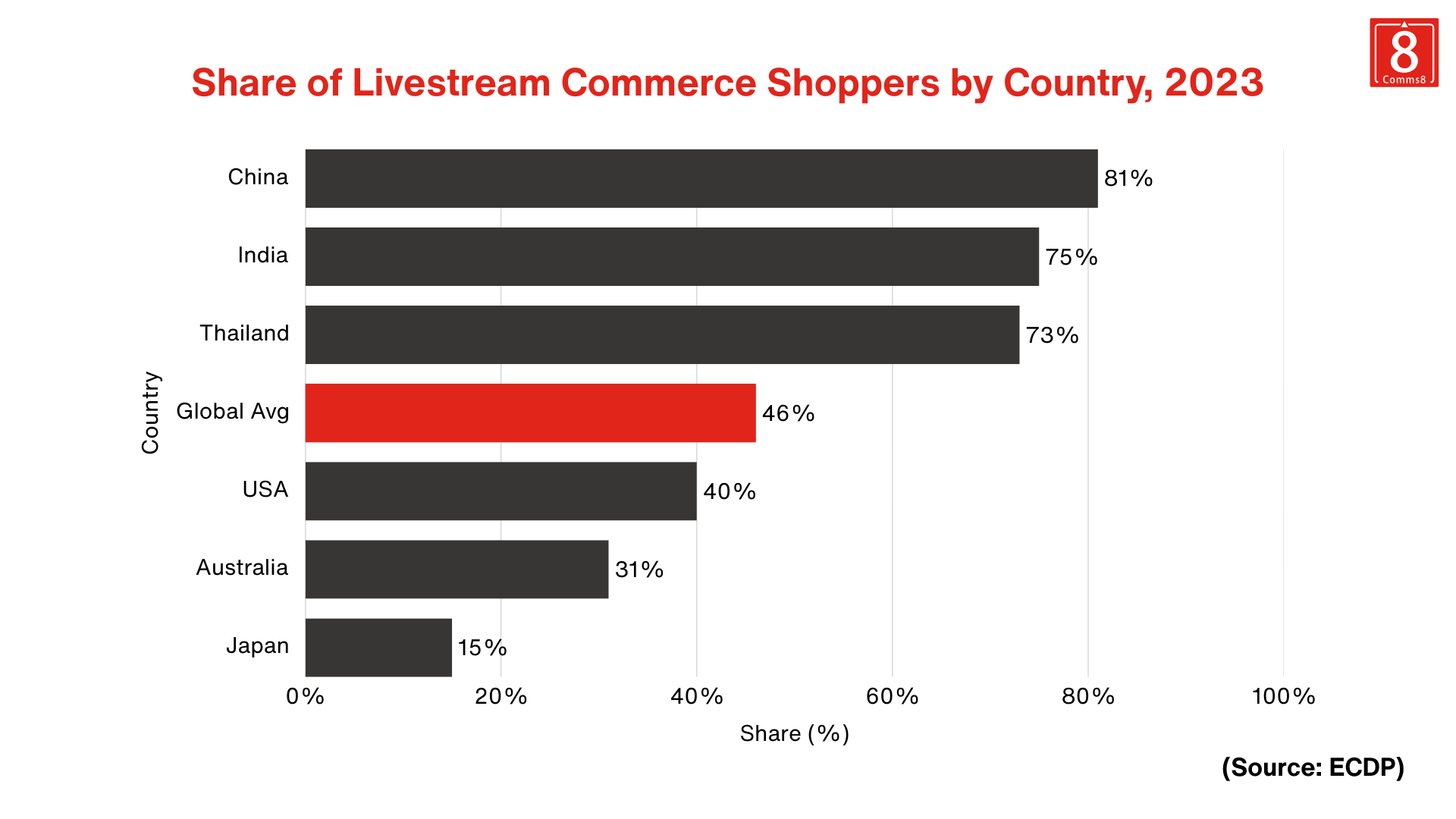
China’s livestream ecommerce model is becoming a global export. But the next chapter isn’t just about where it spreads—it’s about how it evolves.
Douyin vs Taobao: Who Will Lead the Next Phase?
Douyin's rapid growth is challenging Taobao Live’s dominance. While Taobao still leads in traditional ecommerce integrations, Douyin’s short-form video-first design has redefined impulse buying.
Future battlegrounds include:
Search integration: Making discovery more intuitive
Offline-to-online livestreams: Bridging physical stores with live sessions
Cross-border commerce: Expanding beyond China to Southeast Asia and Europe
What’s Next for Brands?
To stay ahead, brands must embrace:
Real-time feedback loops: Use data from comments, likes, and conversions to optimise products
AI-driven insights: Analyse consumer sentiment in live chat to guide pricing and messaging
Omni-channel storytelling: Seamlessly integrate live commerce with WeChat, RedNote (Xiaohongshu), and Mini Programs
Live commerce is no longer a side channel. It’s becoming the main sales driver—and not just in China.
Why Foreign Brands Must Act Now
China’s Gen Z and millennial consumers spend more time on live commerce than on traditional platforms (McKinsey, 2024)
The global cross-border e-commerce market was valued at USD 719.02 billion in 2021 (Rysun,2025)
Summary
Live commerce in China is no longer emerging—it’s establishing a new retail paradigm. With a projected market size of over ¥7 trillion by 2026, it represents not only a massive domestic opportunity but a blueprint for global commerce trends.
Whether you're a luxury brand or a niche DTC label, the message is clear: Act now or risk falling behind.
For global brands seeking to truly connect with Chinese consumers, understanding Asia’s unique cultural context is key. From emotional buying triggers to hyper-local marketing tactics, explore how to craft campaigns that resonate, not just sell.
And if you’re looking for a KOL or influencer, InfluenConnect offers the perfect platform to connect you with over 105,000 Chinese and Asian KOL. Click here to learn more about InfluenConnect.
For more in-depth insights, follow Comms8 where we help your brand expand into foreign markets.
At Comms8, we specialise in helping businesses leverage the power of cross-border marketing in Asia. With our expertise, we can assist you in harnessing the influence of social commerce strategies to boost your brand’s credibility and awareness. Contact us today to learn more about empowering your brand in the dynamic market.