
How KakaoTalk Runs Korea: Culture, Brands & Commerce
In South Korea, KakaoTalk is far more than a chat app. It’s a digital lifestyle hub influencing brand engagement, culture, and commerce. Here’s how it powers Korea and what your brand can learn.
Introduction: Beyond Chat – KakaoTalk Korea’s Digital Empire

In South Korea, KakaoTalk isn’t just an app, it’s a national utility. With a 92% market penetration rate among smartphone users, KakaoTalk is embedded into the daily digital habits of over 47 million Koreans. From catching up with friends to booking appointments, shopping, and making payments, it’s the digital connective tissue of Korean society.
Yet KakaoTalk’s influence stretches beyond communication. It has evolved into a full-fledged digital ecosystem, one that seamlessly integrates culture, commerce, and community. For brands, understanding how KakaoTalk shapes Korea is no longer optional—it’s essential.
Let’s explore how KakaoTalk became the most powerful app in Korea, and what this means for foreign and domestic brands seeking to break into Asia’s most connected consumer market.
KakaoTalk Korea: The Digital Heartbeat of Everyday Life
To grasp KakaoTalk’s impact on Korean society, you need to understand how deeply embedded it is across every touchpoint of a Korean citizen’s daily life. It is the default communication channel for family, friends, schools, workplaces, and even government services.
The Ubiquity of KakaoTalk: From Birthdays to Banking
Used by 92.4% of mobile users (Statista, 2025), KakaoTalk outpaces competitors like WhatsApp and LINE by a wide margin in Korea.
It’s not just text and calls—KakaoTalk offers:
Payments (Kakao Pay)
Shopping (Kakao Gift, Kakao Store)
Reservations (KakaoTalk Booking)
Live shopping (Kakao Shopping Live)
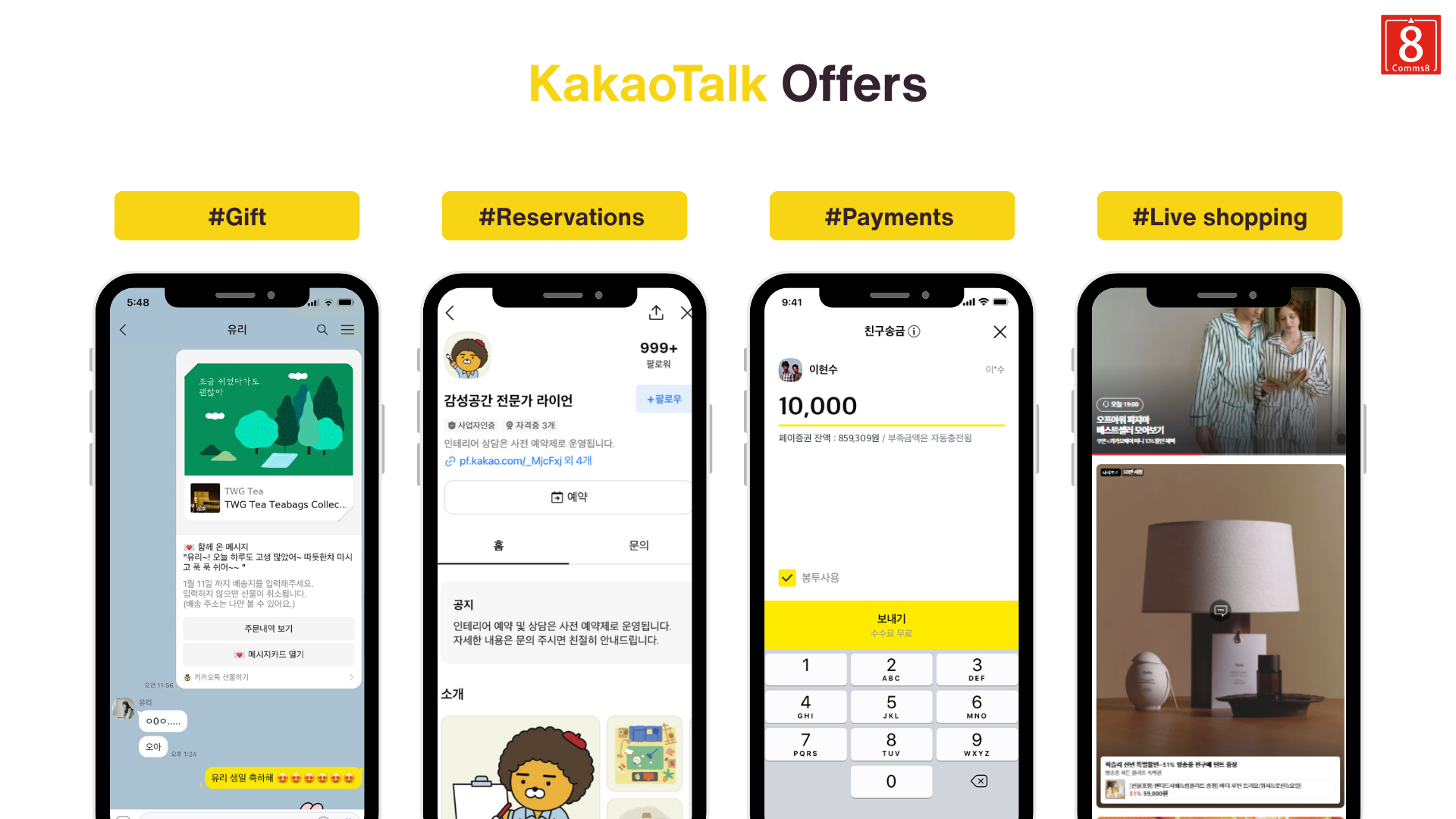
For example, instead of opening five separate apps to schedule a haircut, order gifts, pay bills, or join a group chat—users stay within KakaoTalk.
Think of KakaoTalk as Korea’s “everything app”—a fusion of WhatsApp, PayPal, Shopify, Google Calendar, and Amazon, all in one interface.
Work Meets Messaging: KakaoTalk’s Slack-Like Features
A major update in 2026 brought collaborative features akin to Slack, threaded comments in Open Chat, smart notifications, and improved file sharing. This reflects the shift to hybrid working and the growing need for integrated productivity tools.
These features now allow:
Teams to collaborate in Open Chats without switching platforms
Influencers to manage fan communities in real-time
Businesses to deliver customer service seamlessly
This pivot shows how KakaoTalk Korea is transforming from a personal messenger to a professional platform as well.
KakaoTalk Commerce: Where Conversations Drive Conversions
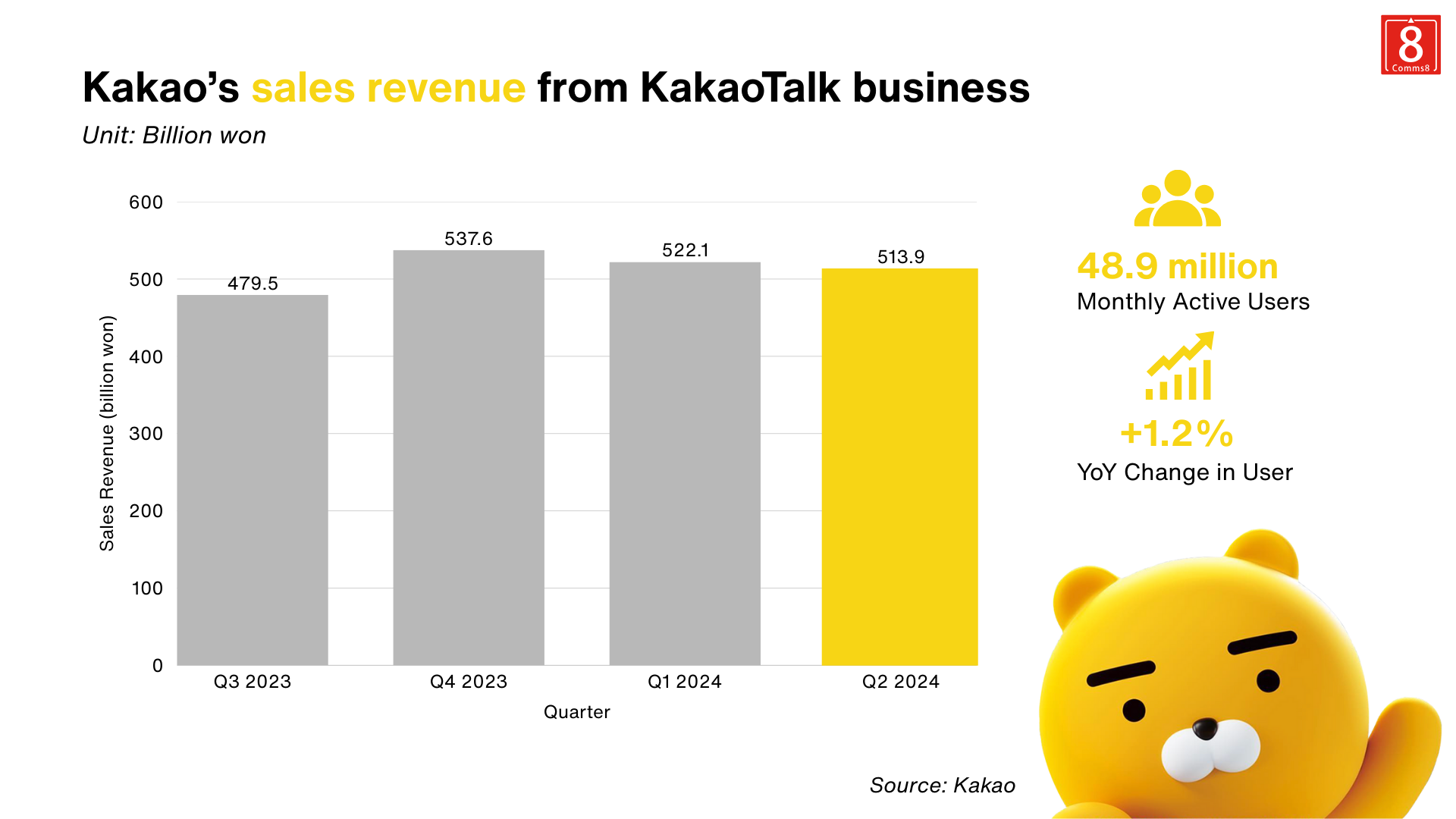
Here’s where it gets exciting for marketers: KakaoTalk is no longer just an app to communicate—it’s a major revenue-generating platform. Its blend of content, commerce, and communication has built an environment where brands live where conversations happen.
Let’s break down the ecosystem brands can tap into.
Introducing Kakao Business: Commerce Meets Community
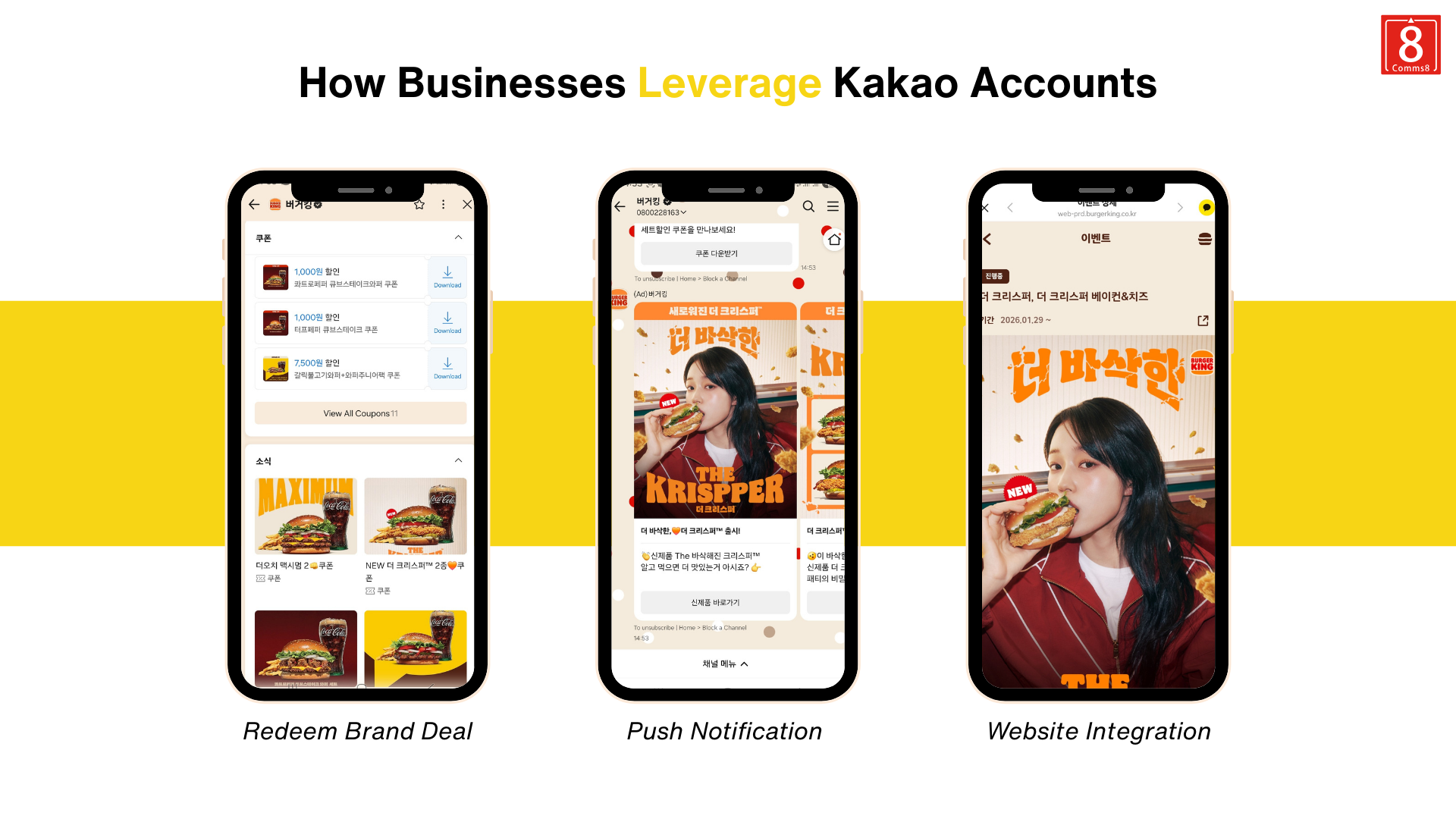
Kakao Business allows brands to:
Launch KakaoTalk Channels (branded mini-sites within the app)
Run personalised ad campaigns based on user behaviour
Offer real-time customer chat support
Create interactive forms, booking tools, and surveys
Key stats:
Kakao reports 2 billion partner friends on KakaoTalk Channel (Kakao)
Businesses using KakaoTalk Channels see average open rates of 70%+ for messages
Kakao Ad users benefit from audience targeting tools using location, interest, and device data
These features let brands move beyond generic broadcasting. For instance, a skincare brand can segment messages to users based on skin concerns, purchase history, and even time of day.
Conversational Commerce: KakaoTalk’s Real Strength
Koreans don’t browse stores—they chat, click, and buy.
KakaoTalk’s “Gift” function enables users to send everything from coffee coupons to designer bags in-app
Kakao Shopping Live features live-streamed sales with influencers, mimicking the success of China’s live commerce boom
Kakao’s "Talk Checkout" lets users buy with a single tap after a conversation
This frictionless experience creates higher conversion rates—and keeps users inside the ecosystem.
Advertising with Precision: Kakao Ad’s Smart Targeting
Kakao’s advertising tools let brands:
Reach hyper-specific audiences using keyword-based and interest-based targeting
Show ads within KakaoTalk, Daum (search engine), and Kakao Map
Use performance-based or guaranteed exposure models
Kakao’s Brand Pick ad tool ensures your ads reach users with a known interest in your category—maximising ROI.
Combined with chatbot integration, this creates a seamless customer journey from discovery to purchase.
KakaoTalk and Korean Culture: From Memes to Movements
In Korea, KakaoTalk isn’t just an app—it’s a cultural phenomenon. Its iconic yellow speech bubble is as recognisable as any national symbol. From viral sticker packs to celebrity campaigns, KakaoTalk shapes how people express identity, build relationships, and consume content.
Branding with Emotions: Stickers, Characters, and Memes
One of KakaoTalk’s strongest emotional levers is its character IP. The Kakao Friends—Ryan, Apeach, Muzi, and others—aren’t just cute avatars. They are:
Merchandise lines
Café themes
Brand ambassadors
Brands can partner with Kakao IP to co-create limited edition products or sticker packs, which become highly shareable assets within chats.
KakaoTalk as a Platform for Social Movements
Open Chat has emerged as a tool for grassroots organising and public discourse. During recent elections, environmental campaigns, and even pandemic-related updates, Open Chat rooms became real-time news hubs.
This gives brands an opportunity to:
Align with causes and social conversations
Launch community-based initiatives
Offer customer service or crisis response in real time
The line between social platforms and civic infrastructure is increasingly blurry—especially in a society as connected as Korea’s.
K-Culture Export via KakaoTalk
KakaoTalk has become a gateway to the K-pop and K-drama ecosystems. Entertainment companies use KakaoTalk Channels to:
Offer exclusive content
Sell fan merchandise
Run global fan events
For global brands trying to ride the Korean wave (Hallyu), KakaoTalk offers the perfect bridge.
Did you know? Kakao acquired Melon (Korea’s top music streaming app) and integrates it with KakaoTalk—turning the app into a promotional platform for artists and brands alike.
Summary: Why Brands Must Understand KakaoTalk Korea
KakaoTalk isn’t just Korea’s top messenger. It’s the digital super-app that fuels Korea’s social, cultural, and commercial infrastructure. For any brand looking to penetrate South Korea—or understand what a future-forward digital ecosystem looks like—KakaoTalk is the blueprint.
Key Takeaways for Brands:
KakaoTalk Korea reaches 90%+ of mobile users, embedding your brand directly into everyday life.
Its commerce tools empower brands to sell, serve, and connect within the chat.
Cultural relevance through characters, memes, and fandoms strengthens emotional ties with consumers.
Advanced ad tools offer personalised targeting based on user intent and behaviour.
And if you’re looking for a KOL or influencer, InfluenConnect offers the perfect platform to connect you with over 105,000 Chinese and Asian KOL. Click here to learn more about InfluenConnect.
For more in-depth insights, follow Comms8 where we help your brand expand into foreign markets.
At Comms8, we specialise in helping businesses leverage the power of cross-border marketing in Asia. With our expertise, we can assist you in harnessing the influence of social commerce strategies to boost your brand’s credibility and awareness. Contact us today to learn more about empowering your brand in the dynamic market.