
Content Localisation for Asia: Why Translation Is Not Enough for Chinese Markets

Expanding into China presents a unique opportunity for global brands, but it also introduces a level of complexity that cannot be solved through direct translation alone. Many companies underestimate how distinct the Chinese digital ecosystem and consumer mindset are, resulting in campaigns that feel disconnected or ineffective. This is where content localisation China becomes a strategic requirement rather than a tactical afterthought.
At Comms8, our approach to Content Localisation, Chinese Digital Marketing Services, and broader Services Overview is designed specifically to address these gaps. For brands exploring channels highlighted in our Social Media in China Overview, the difference between translation and localisation often determines whether a campaign resonates or fails.
Translation vs Localisation: A Critical Distinction
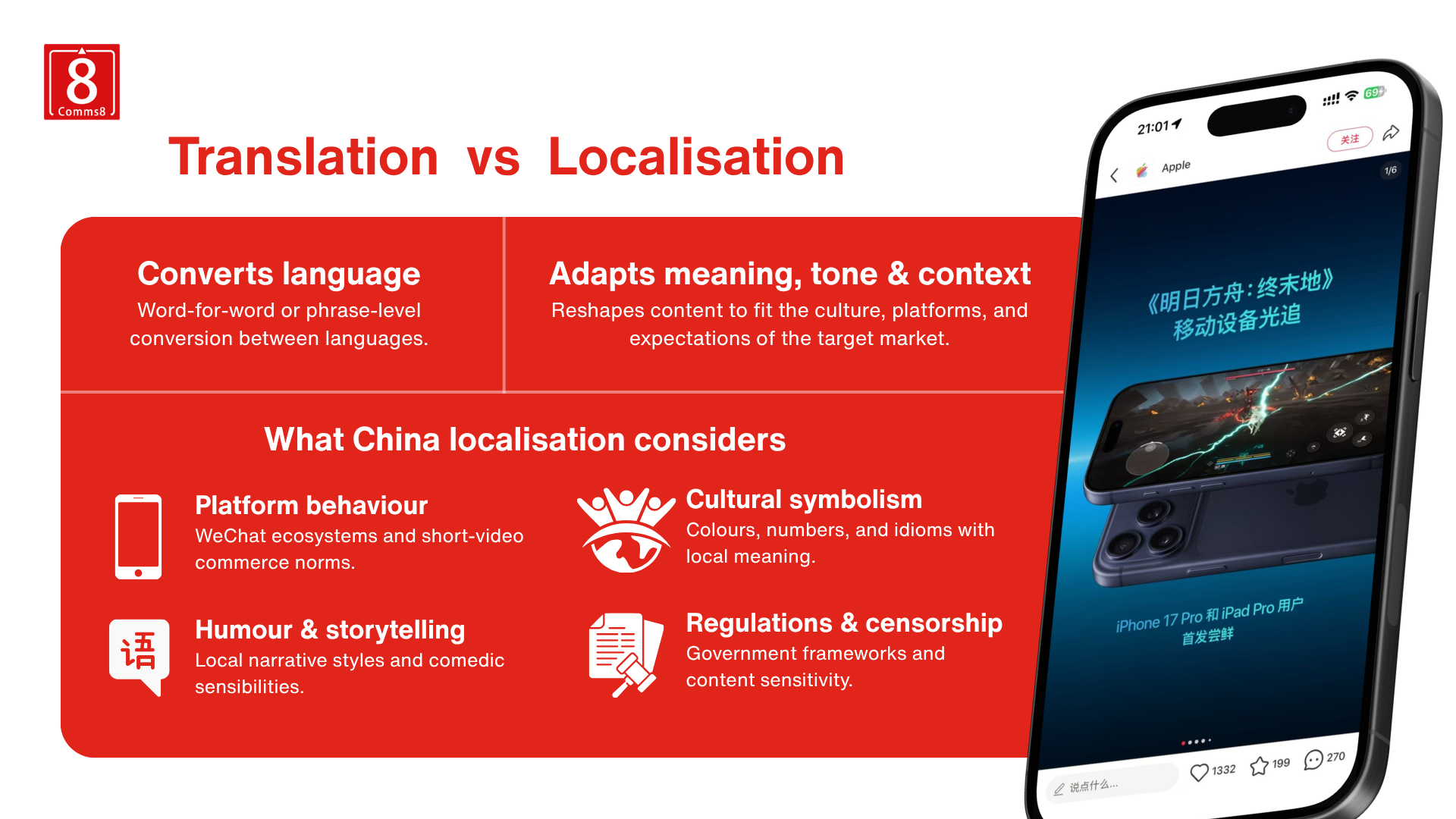
Translation converts language. Localisation adapts meaning, tone, and context.
In China, this distinction is amplified. Consumer expectations are shaped by local platforms, cultural nuances, and regulatory frameworks. Effective Chinese content localisation considers:
Platform-specific behaviour such as WeChat ecosystems and short-video commerce
Cultural symbolism, including colours, numbers, and idioms
Local humour and storytelling preferences
Government regulations and censorship sensitivity
For example, a slogan that works in English may appear overly direct or culturally tone-deaf in Mandarin. This is why transcreation for China is often necessary. It allows brands to preserve intent while reshaping expression entirely.
Why China Requires a Dedicated Localisation Strategy
China is not just another Asian market. It operates within a closed digital ecosystem dominated by domestic platforms such as WeChat, Douyin, and Baidu.
According to Statista (2026), China had over 1.05 billion internet users as of 2024, with more than 98 percent accessing the internet via mobile devices.
Additionally, McKinsey reports that Chinese consumers are among the most digitally engaged globally, with social commerce contributing significantly to purchasing decisions. These factors mean that content localisation China must align with mobile-first behaviour, integrated ecosystems, and fast-moving digital trends.
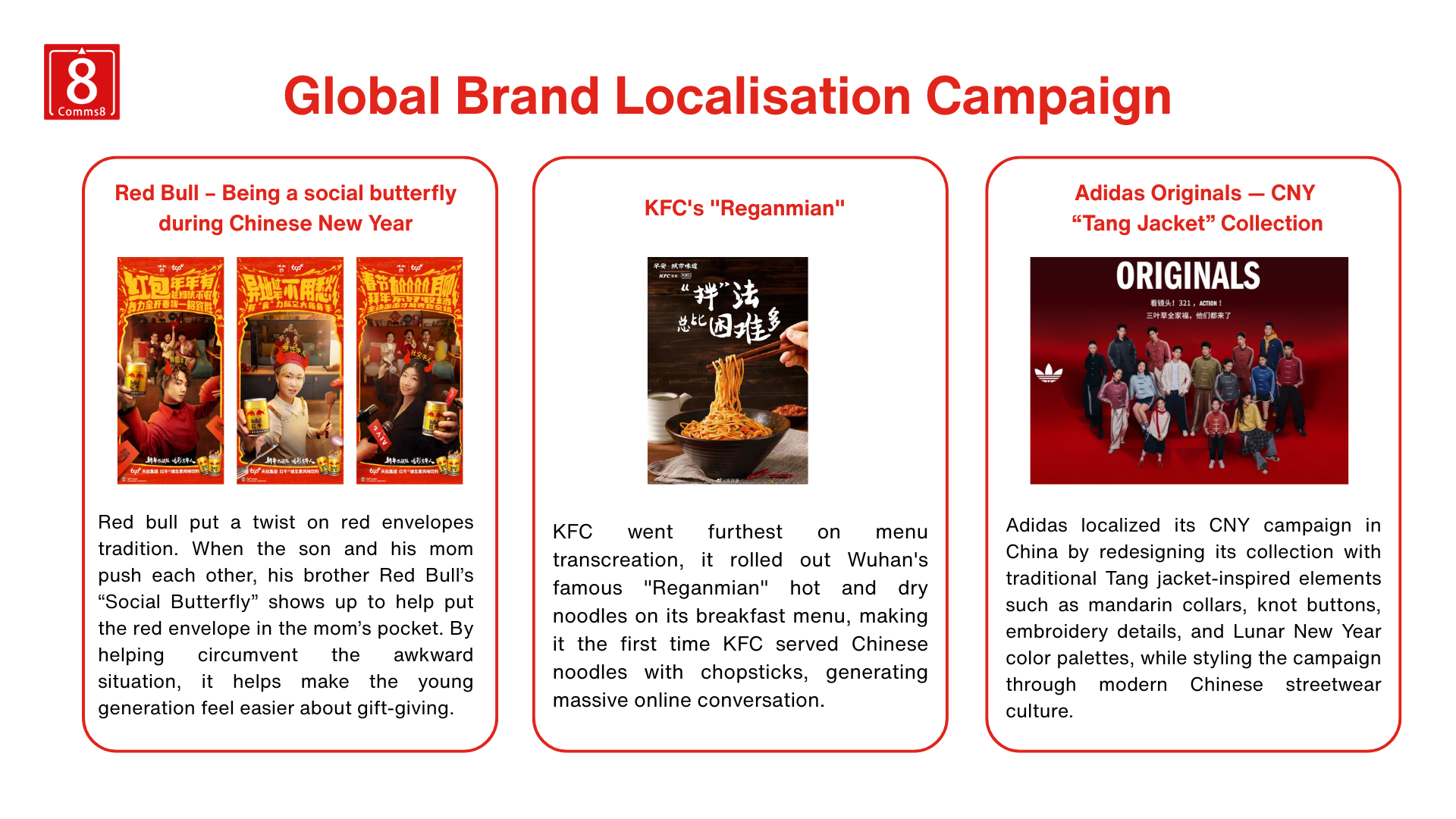
Cultural Relevance Drives Performance
Understanding cultural context is central to success. Brands that fail to adapt messaging often appear foreign or out of touch.
Our insights on Cultural Context in Asia show that audiences respond more strongly to content that reflects local values such as collectivism, social status, and trust in peer recommendations.
This is particularly relevant when brands aim to localise marketing for Asian audiences, as China often sets the benchmark for digital engagement in the region.
Key cultural considerations include:
Emphasis on community and social proof
Preference for storytelling over direct selling
Sensitivity to symbolism and language nuance
Strong trust in Key Opinion Leaders
These factors directly influence how Chinese content localisation should be executed.
Platform-Specific Localisation
Unlike Western markets, China’s platforms require tailored content strategies.
Baidu and Search Behaviour
Search optimization must align with local algorithms and user intent. Our Baidu SEO services focus on keyword behaviour unique to Chinese users, which differs significantly from Google patterns. This reinforces the need for content localisation in China beyond simple translation.
WeChat Ecosystem
WeChat is not just a messaging app. It is a full-service platform for content, commerce, and customer engagement. Brands entering this space benefit from insights in our WeChat Marketing for Western Brands guide. Effective transcreation for China ensures content feels native within this environment.
Paid Media and Advertising
Advertising formats, targeting, and compliance differ widely. Our China Online Advertising services demonstrate how campaigns must be adapted for local regulations and user expectations. This is another area where Chinese content localisation becomes essential.
Data-Driven Localisation
Effective localisation is not purely creative. It is supported by data and market insights.
Our Market Research services help brands understand audience segmentation, behaviour patterns, and competitive positioning. This enables more precise content localisation China strategies.
This expectation reinforces the importance of Chinese content localisation grounded in real user data.
Common Mistakes Brands Make
Many international brands entering China repeat similar errors:
Relying solely on translation without adapting tone or messaging
Ignoring platform-specific formats
Underestimating regulatory requirements
Failing to align with local consumer values
Avoiding these pitfalls requires a structured approach to content localisation China that integrates cultural, technical, and strategic elements.
Building a China-Ready Content Strategy
To succeed in China, brands must move beyond surface-level adaptation. A robust strategy should include:
Deep audience research
Platform-specific content planning
Consistent transcreation for China across campaigns
Integration with search, social, and influencer channels
This is particularly important for companies looking to localise marketing for Asian audiences while maintaining global brand consistency.
Conclusion
China represents one of the most advanced and competitive digital markets globally. Success requires more than accurate language conversion. It demands a comprehensive localisation strategy that aligns with cultural expectations, platform ecosystems, and consumer behaviour.
Content localisation China is not optional. It is a foundational component of market entry and growth. Brands that invest in Chinese content localisation, leverage transcreation for China, and effectively localise marketing for Asian audiences are better positioned to build relevance, trust, and long-term success in this market.
For more in-depth insights, follow Comms8 where we help your brand expand into foreign markets.
At Comms8, we specialise in helping businesses leverage the power of cross-border marketing in Asia. With our expertise, we can assist you in harnessing the influence of social commerce strategies to boost your brand’s credibility and awareness. Contact us today to learn more about empowering your brand in the dynamic market.