
Live Commerce in China 2026: How Brands Are Winning the Trillion-Yuan Livestream Market
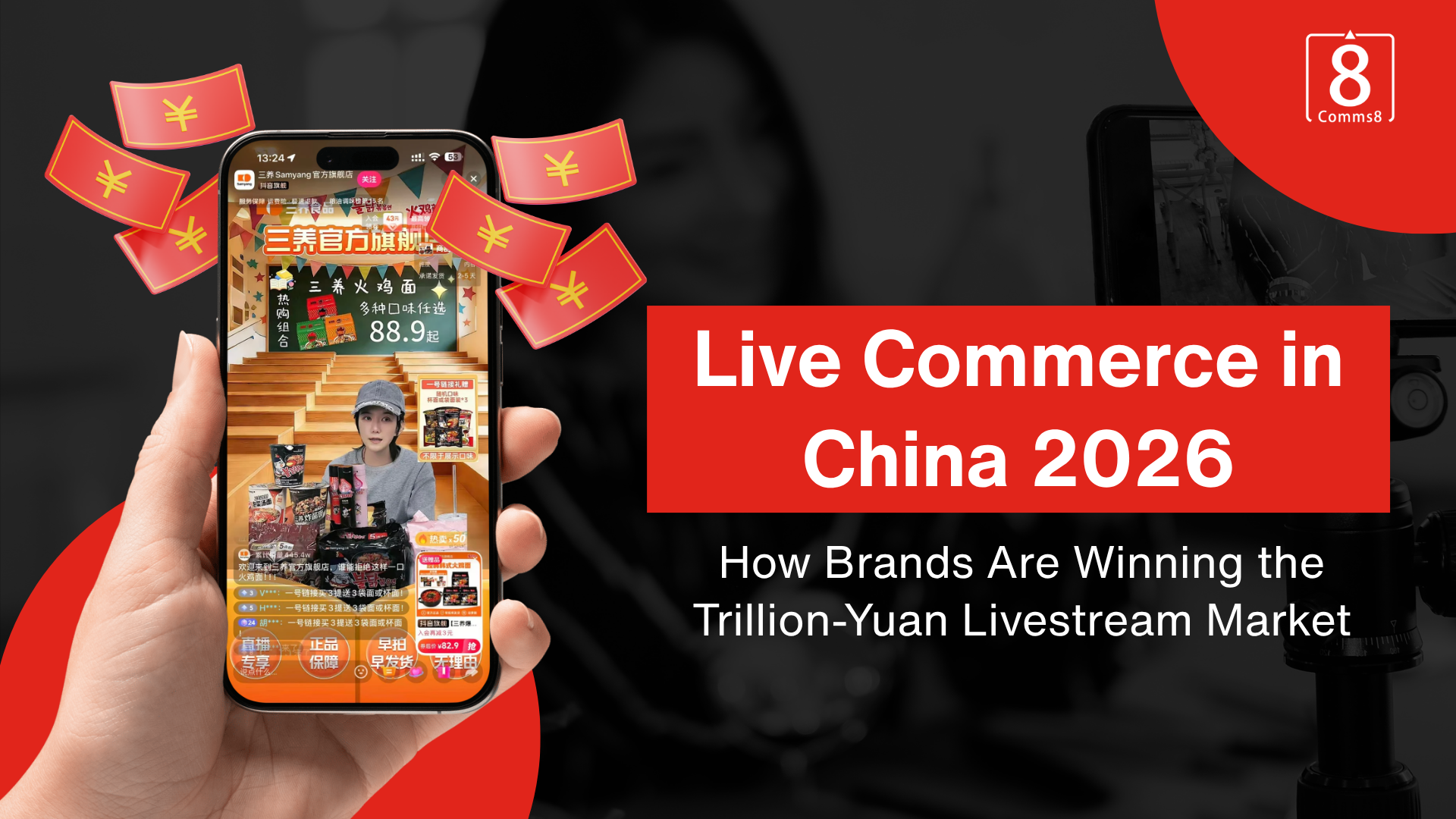
China’s livestream economy has moved well beyond its early hype cycle. What was once an experimental sales channel is now a core pillar of digital commerce, with brands treating it as a primary revenue driver rather than a supporting tactic. For businesses entering or scaling in this space, integrated capabilities across Chinese Digital Marketing Services, Social Media China Overview, Video Marketing, and Influencer Marketing are no longer optional. They form the infrastructure behind high-performing live commerce China strategies.
Market Size and Growth Trajectory
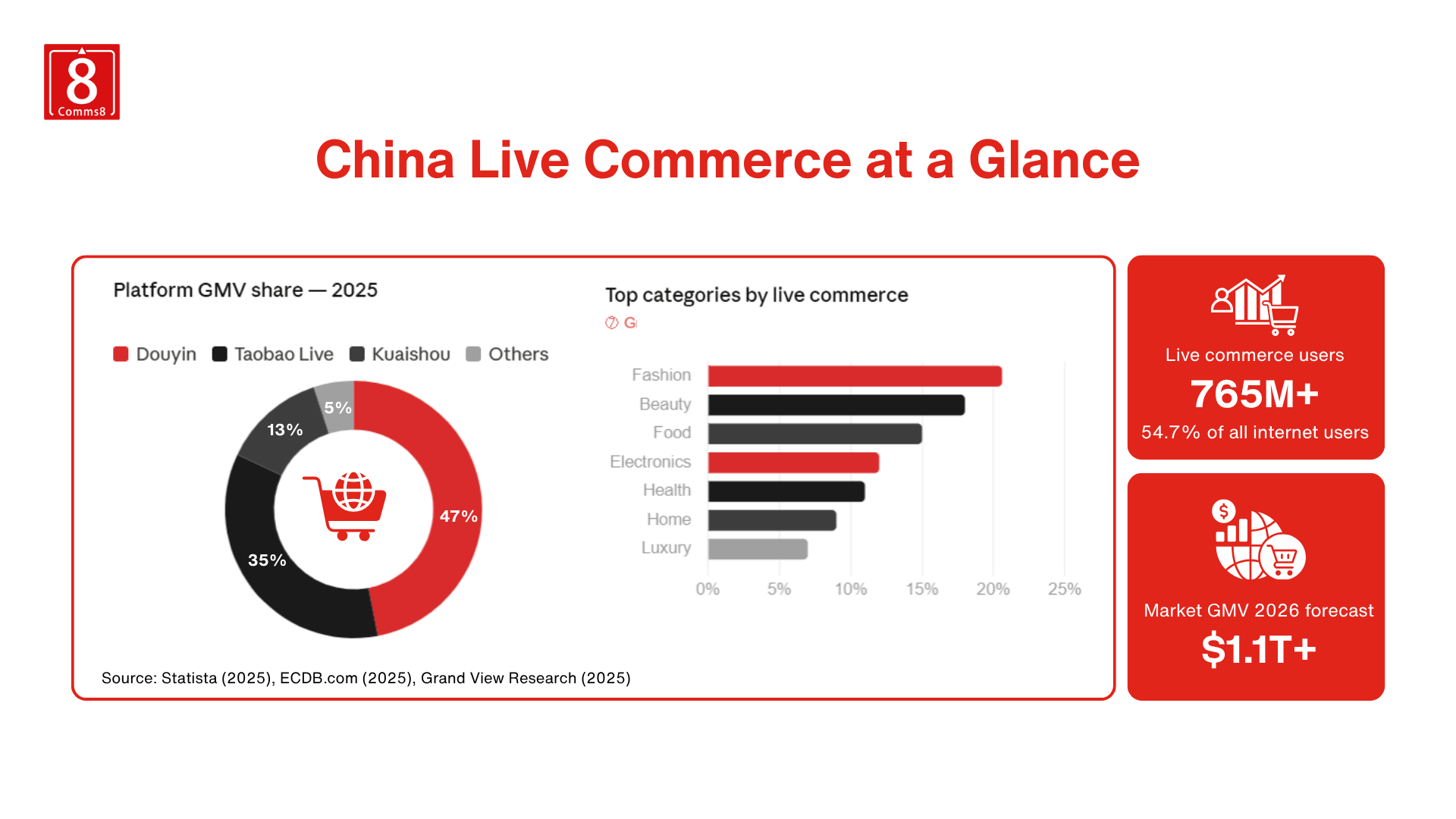
The live commerce China ecosystem continues to demonstrate strong momentum. China's live commerce market is expanding incredibly with 420 billion Yuan in 2019 and reaching 8,18 trillion Yuan by 2026 (Statista, 2026). This expansion reflects structural changes in consumer behavior. Livestreaming is no longer viewed as entertainment with embedded commerce. It is commerce delivered through entertainment.
Platform Evolution and Competitive Landscape
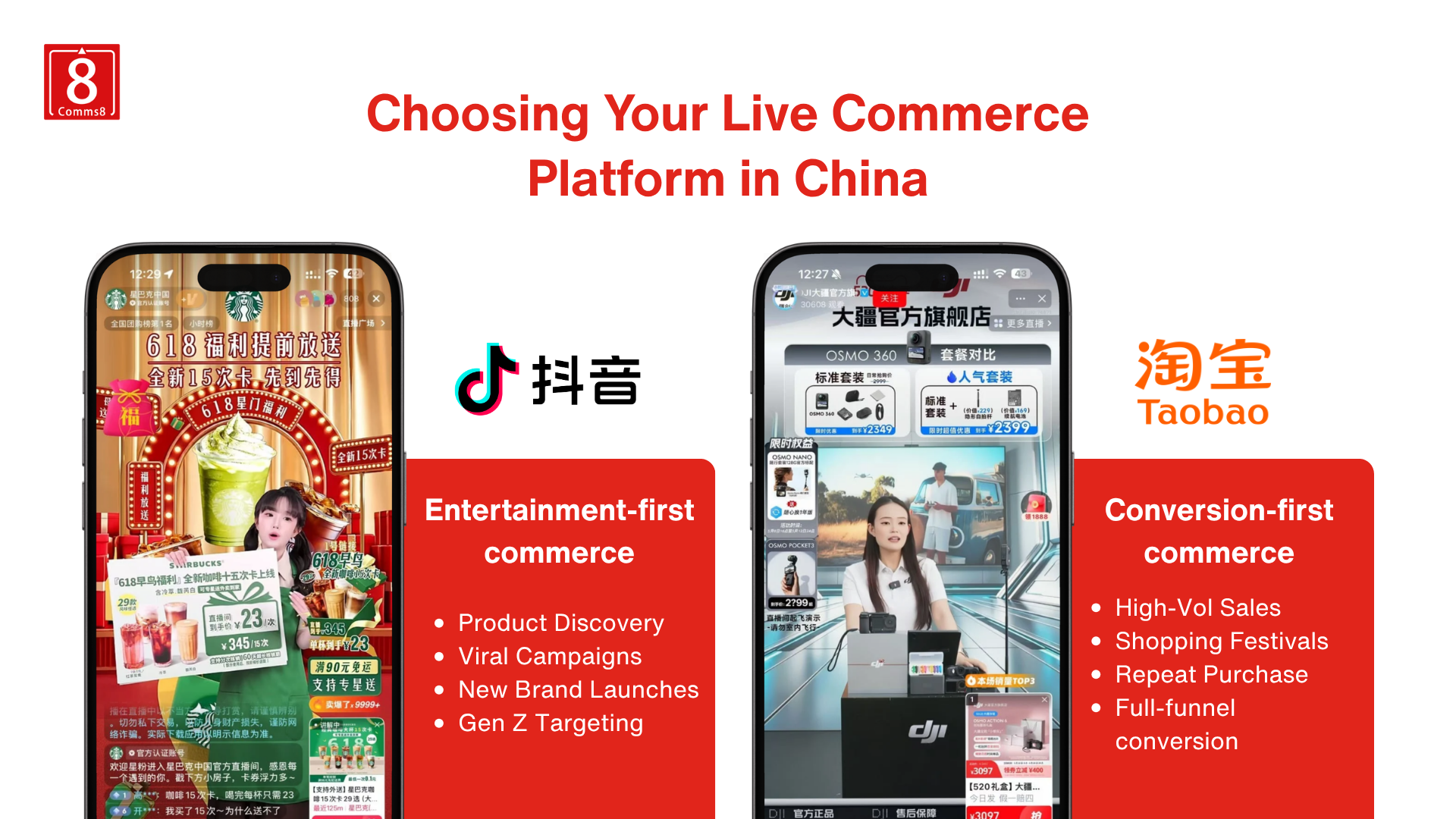
The dominance of China live streaming ecommerce is shaped by a small number of highly influential platforms, each with distinct positioning:
Taobao Live continues to lead in conversion-driven retail ecosystems
Douyin integrates algorithmic discovery with short video and livestream commerce
Kuaishou maintains strong engagement in lower-tier cities
For brands, platform selection is now a strategic decision tied to audience segmentation, price positioning, and content style. Taobao Live marketing remains effective for established ecommerce brands, while Douyin live commerce brand strategy is increasingly central for discovery and rapid scaling.
What Has Changed Since 2025
Three structural shifts define live commerce China in 2026:
1. From Traffic Buying to Content Systems
Brands are moving away from one-off influencer campaigns toward always-on content engines. This aligns closely with broader China live streaming ecommerce trends, where consistency drives algorithmic visibility.
2. Professionalization of Hosts
Top livestream hosts now operate like media professionals, supported by production teams, data analysts, and scriptwriters. This has raised the barrier to entry, making execution quality critical.
3. Integration with Paid Media
Livestreaming is no longer isolated. It is integrated into full-funnel strategies that include China Online Advertising, allowing brands to amplify reach and retarget audiences effectively.
Brand Strategy Framework for 2026
Winning in live commerce China requires a structured approach rather than experimentation.
1. Platform Specific Strategy
Each platform demands tailored execution:
Douyin live commerce brand strategy should prioritize storytelling and short-form video seeding before livestream events
Taobao Live marketing should focus on promotions, bundling, and conversion optimization
Brands that replicate content across platforms without adaptation tend to underperform.
sion.
2. Data and Conversion Optimization
Advanced brands are applying performance marketing principles to livestreaming:
Real-time audience analytics
Conversion funnel tracking
SKU-level performance monitoring
This data-centric approach is becoming standard in China live streaming ecommerce operations.
Case Patterns: What Winning Brands Are Doing
Across sectors, successful companies share several characteristics:
They treat livestreaming as a long-term channel rather than campaign-based activity
They invest in in-house capabilities alongside agency partnerships
They align Douyin live commerce brand strategy with broader social media narratives
They continuously optimize Taobao Live marketing through pricing and promotion testing
These patterns indicate that maturity in live commerce China is less about scale and more about operational discipline.
Challenges to Consider
Despite its growth, the sector presents constraints:
Rising customer acquisition costs
Increasing competition for attention
Regulatory scrutiny around advertising claims
Brands must balance aggressive growth with compliance and brand equity.
Outlook for 2026 and Beyond
The trajectory of live commerce China suggests continued expansion, but with tighter competition and higher expectations for execution. As the market matures, differentiation will depend on:
Content quality
Platform specialization
Integration with broader digital ecosystems
China live streaming ecommerce will remain a defining feature of global retail innovation, influencing strategies far beyond China.
Conclusion
Live commerce China in 2026 is a structured, high-stakes environment where success depends on strategic alignment across platforms, content, and influencer ecosystems. Brands that invest in integrated capabilities, particularly across social media, video, and influencer marketing, are best positioned to capture value in this trillion-yuan market.
For organizations seeking to operationalize these strategies, aligning with experienced partners and leveraging full-service digital ecosystems is no longer optional. It is a prerequisite for sustained growth. Success in live commerce China is no longer driven by experimentation or short-term wins. It depends on structured execution across platforms, content, and data.
In practical terms, brands that win are those that combine platform-native strategy, scalable content systems, and measurable performance frameworks across China live streaming ecommerce.
For more in-depth insights, follow Comms8 where we help your brand expand into foreign markets.
At Comms8, we specialise in helping businesses leverage the power of cross-border marketing in Asia. With our expertise, we can assist you in harnessing the influence of social commerce strategies to boost your brand’s credibility and awareness. Contact us today to learn more about empowering your brand in the dynamic market.